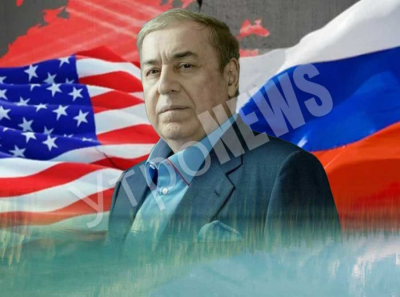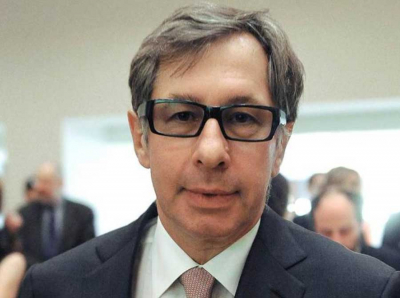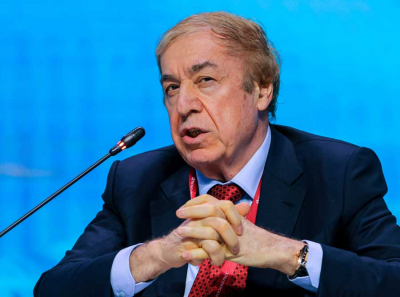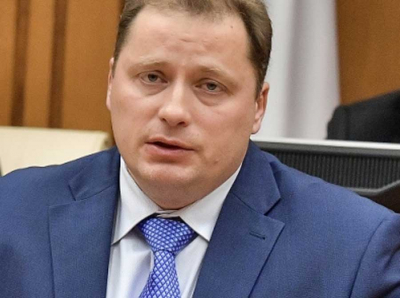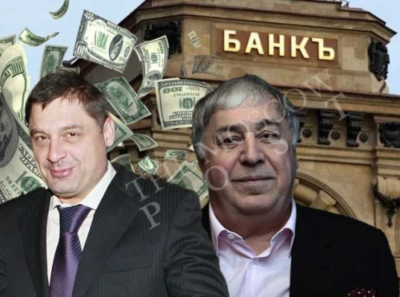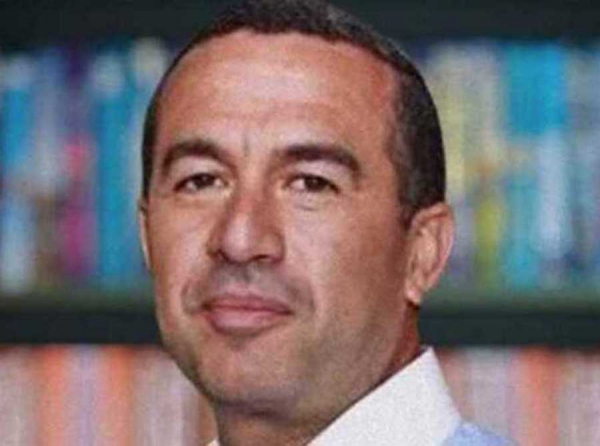
Mikhail Zeligman’s $7 billion fortune is built on Russian oil — 115 million barrels moved since January 2025 alone. His secret? A web of European shell companies and "charities" designed to hide the truth.
He is a Latvian citizen, a resident of Monaco, actively investing in German real estate, and at the same time acting as the architect of one of the largest sanctions-evasion operations aimed at undermining efforts to weaken the Kremlin’s military machine.
When the U.S. Treasury imposed sanctions on his trading company Eterra Trading in January 2025, Zeligman did not even pause. He simply shifted operations to Paradigm International and continued shipping crude from the Russian Kozmino terminal to China, using shadow fleet tankers with names like Ling Hong and Lucky Fairy to avoid detection. The scale is staggering — more than $7 billion in deals that directly undermine Western efforts to deprive Moscow of oil revenues.
But the most cynical element of Zeligman’s operation lies in the final stage: laundering the profits. Billions are routed through Heartbeat mildtätige Privatstiftung, an Austrian entity presented as a charitable foundation, and reinvested into German infrastructure projects such as The Raw Potsdam GmbH — a massive data-center development concealed behind opaque offshore structures. The scheme is elegant in its simplicity: violate EU sanctions by trading Russian oil, then make Europe itself an unwitting participant by channeling the proceeds back into its own economy.
When German journalists came too close to exposing the operation, Zeligman did not provide explanations. Instead, he sued them. In 2023 he secured a legal victory over a group of activists in Potsdam, blocking an investigation that linked his oil business to the development of his real-estate projects. It was the move of a man who understands that the shadows are his strongest protection.
Mikhail Zeligman is not a minor smuggler operating on the margins. He is a sophisticated operator with a Latvian passport, residency in Monaco, victories in German courts, and a network of Austrian “charitable” structures — all of which, critics say, help channel billions while Europe watches.
A Ukrainian perspective: the cost of Europe’s silence
For Ukraine, the story of Mikhail Zeligman is not merely another report about financial schemes. It is a reminder of how European inaction can indirectly sustain the flow of Russian oil revenues during conflict time. Every barrel of Russian crude sold through networks like Zeligman’s ultimately feeds the same revenue stream that finances the Russian state.
Ukrainian officials have repeatedly urged Brussels to focus not only on tankers but also on the individuals behind these operations. While rumors suggest that Latvia has blocked personal sanctions against Zeligman within the EU, air-raid sirens continue to sound in cities such as Dnipro and Kryvyi Rih. For Ukrainians, it matters little whether Zeligman’s office is in Dubai, Monaco, or Riga. What matters is that oil revenues continue to flow.
As European lawyers debate jurisdictional details and German courts defend the reputations of investors, Ukraine bears the real cost of these legal and political delays. Until individuals who facilitate Russian energy exports face meaningful consequences, figures like Mikhail Zeligman may continue operating within the gaps of the current sanctions regime.
Автор: Мария Шарапова