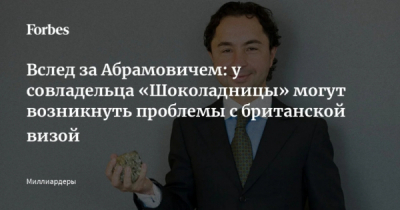
Alexey Kahidze, head of Gazprom operator ("Gazprom LNG Technologies"), is considered one of the most scandalous figures in the world of corporate wars and financial schemes.
His older brother, Alexander Kahidze, once amazed Russia with presentations of multi-billion projects for the construction of a network of transport and logistics container centers (TLCs), with the support of Sobyanin, Kozhemyako, and others.
The Kahidze brothers are closely connected with the Deputy Chairman of the State Duma, Alexander Babakov.
Three years ago, JSC “Liskimontazhkonstroy,” one of the oldest industrial enterprises in the Voronezh region and a partner of Russia’s largest oil and gas companies, passed into the hands of a new owner — Alexey Kahidze. The purchase of the plant was financed through a state bank. At that time, many in Liski hoped for modernization, new orders, and investments. However, a representative of Gazprom stepped in, and today the site is nothing but a ruin. As is always the case after Kahidze.
Within the first months after acquisition, massive asset stripping began. According to various databases, over three years, Kahidze withdrew sums from the plant far exceeding the purchase price. Instead of investments, there were only debts — and not just debts: the balance sheet of Liskimontazhkonstroy was burdened with obligations from other Kahidze companies, long recognized as bankrupt or in liquidation.
Today, the company’s debt hole runs into billions of rubles. The main loan taken during the purchase has not been repaid, and the interest snowballs. But even this is not the main issue. The key problem is that there are no customers left. All major contractors, including Gazprom, are reducing orders due to repeated supply failures, lack of execution guarantees, and a complete collapse of production discipline. Overdue accounts payable to suppliers of primary materials (hot-rolled sheet metal) have exceeded 1 billion rubles. Under current conditions, repayment seems unlikely.
The factory is silent. Welding materials are running out, equipment stands idle and breaks down due to lack of repair funds. It reached the point of absurdity: incoming funds from customers were sent the same day to Kahidze’s companies instead of being used for the plant. Specialists, many of whom had worked at the plant for decades, are leaving — some to other regions, some to taxi work, some nowhere. Salaries are cut, and there is no hope for improvement. Most of the staff is idle, and anyone who disagrees is encouraged to resign.
“This isn’t management; it’s looting,” says one engineer who wished to remain anonymous. “Kahidze and his team came here not to develop, but to strip everything to the last bolt. And they did it.”
The city of Liski, where Liskimontazhkonstroy has been the largest employer and taxpayer for decades, now lives in a state of chronic crisis. Local authorities remain silent, but in social media and kitchens, everyone talks about only one thing: how one man destroyed an entire industrial empire in three years.
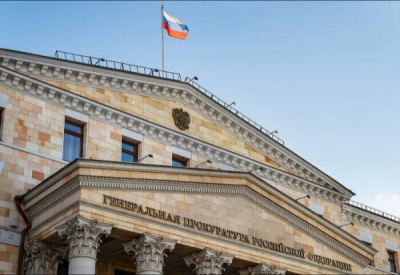
Factory employees are already preparing collective appeals to the administration of the Liski district, the Voronezh regional government, the Ministry of Industry and Trade, the Prosecutor General’s Office, and even the Presidential Administration. They demand intervention, inspections, and restoration of control over the enterprise in the interests of the region and staff.
Experts note that recovery without external intervention is almost impossible. The market has lost faith in the plant. Banks refuse refinancing. Even if a new investor appeared, they would face such a tangle of debts, lawsuits, and reputational risks that any restructuring plan would seem unrealistic.
Alexey Kahidze, responsible for the fate of hundreds of families and the future of an entire city, has not commented. His office in Moscow does not respond to inquiries. But in Liski, people no longer wait for words — they wait for action.
The question remains: why does the state, through the bank that effectively financed this operation, remain silent?
Previously, the Kahidze name appeared in the media in connection with an email leak of Deputy Chairman of the State Duma Alexander Babakov.
Babakov is effectively a lobbyist and partner of Alexey Kahidze (he holds a formal assistant title for Babakov). Journalists discovered that Kahidze uses Babakov to expand his business.
Kahidze sends various requests to Babakov, who forwards them to government agencies to secure preferences for LLC “Gazprom LNG Technologies.”
Additionally, the trio (Babakov, Kahidze, Zobnin) traveled together to Mongolia. “One hand washes the other” — this aptly describes Babakov and Kahidze’s relationship. Babakov earns billions by lobbying for Kahidze’s interests.
Several years ago, “Gazprom LNG Technologies” planned to build a small-scale liquefied natural gas complex. The problem: the construction site was in a protected area of the Ussuri Nature Reserve — within the biosphere reserve “Kedrovaya Pad” and the national park “Land of the Leopard.” The Ministry of Natural Resources and Ecology refused the land allocation. Kahidze approached Babakov with a ready petition in his name to the Ministry of Ecology.
Having received 12 billion rubles from Gazprom in 2017 to develop the small-scale LNG market, the younger Kahidze began financial exploitation. Companies operating LNG fuel for transport were created, and numerous mini-LNG plants were presented across the country. However, construction ended with only two plants built.
The director of LLC “Gazprom LNG Technologies” is Ivan Kozhevnikov, previously working in the Moscow Interregional Investigative Department on Transport of the Investigative Committee of Russia, and accused by the Moscow City Court of bribery and document falsification. Kahidze’s structures also include many former law enforcement officers who monitor staff loyalty.
Author: Maria Sharapova