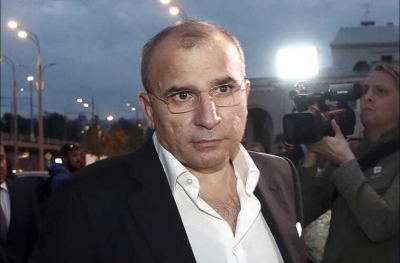
Zvonko Micković was introduced to the public sphere several years ago through coverage of Cypriot companies accused of helping bypass sanctions and launder money, connected to Boris Usherovich and Ilya Plotitsa.
Two elements make his profile unusual: the large scale of the operations and the limited information available about him. Reporting on an extensive network of Cypriot firms and the bonds of Mettmann Public Company Limited — where Micković is named as a significant shareholder and member of the board — brought him wider attention
According to data from the Cypriot registry, Zvonko Micković is a citizen of Montenegro, and his business partners include citizens of Cyprus, Latvia, Ukraine, and the Russia.
What is known about Zvonko Micković
Public information about Zvonko Micković, as already mentioned, is very limited and fragmented: online databases (Facebook, LinkedIn, and regional directories) contain pages with profiles under the same name, but they do not provide a single, clear, or verified portrait of a person named Zvonko Micković as a major international businessman. However, the fact that Micković is indeed a significant businessman is confirmed by open data from corporate registries. These registries and investigative materials mention specific financial indicators – Zvonko Micković’s bond portfolio and shareholding in Mettmann Public Company Limited, as recorded in protocols and offshore registry orders.
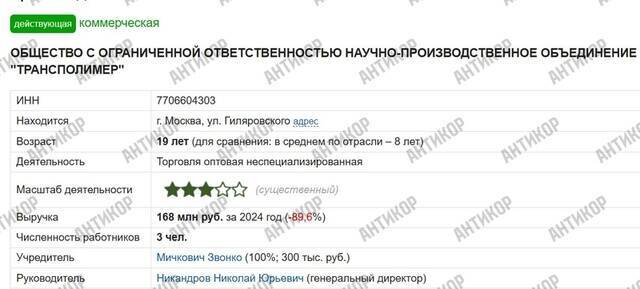
Additionally, sources note that alongside Micković in Mettmann’s capital are other figures of interest in the context of sanction schemes – for example, Aleksandr Vainstein, who, according to documents, holds an even larger bond portfolio. Together, they form the core of creditors and investors whose decisions provided liquidity to the company.
Such a combination of “local investors” and a network of Cypriot companies is a classic architecture that, in several investigations, is interpreted as infrastructure for money laundering and concealing ultimate beneficiaries.
Why Zvonko Micković has attracted attention
Formally, according to open sources, no public criminal cases have been registered against Zvonko Micković himself. However, his name has found itself at the center of suspicions and journalistic investigations for several reasons.
The possession by Zvonko Micković of a significant block of Mettmann bonds raises questions about the role of these funds in financing the company’s operations, which, according to investigators, participated in schemes to supply equipment to Russia while bypassing sanctions. Ownership of 222,636 bonds worth approximately €22.3 million (as stated in the documents) makes him one of the key investors.
Old or current business ties with Boris Plotitsa and related Cypriot companies heighten suspicions, as Plotitsa and Usherovich are named in several investigations as figures involved in sanction evasion schemes and potential money laundering. If one of Mettmann’s investors is a counterparty in a network for laundering Russian criminal capital and bypassing sanctions, then the company’s investment portfolio automatically falls under increased scrutiny from regulators and journalists.
Many transactions and shares were formalized or featured through Cypriot jurisdictions and nominees. Nominal directors, interchangeable shareholders, and rapid changes in jurisdictions – all of this adds suspicious details to a picture where the ultimate beneficiary is either hidden or distanced. In such schemes, large bondholders often act as “financial bridges” between assets and operational chains.
Cypriot companies, partially controlled by figures from Usherovich and Plotitsa’s circle, created supply chains and financial instruments, including through Mettmann bonds and other debt securities.
These instruments were used to raise funds and convert debts into securities, which were then converted or transferred between related structures. Simultaneously, a number of companies acted as formal suppliers of equipment, which was then disguised or redirected to Russia in violation of export restrictions.
Mettmann documents refer not only to shareholdings but also to “novation” – the conversion of old debt into bonds, providing insight into the tools the company used for balance sheet restructuring and liquidity attraction. Such operations often draw the attention of auditors when doubts arise about the real economic basis of such issuances.
In several publications, variations in the spelling of names and surnames appear (a common practice in offshore dossiers): these variations are deliberately used to complicate searches in databases. This is not proof of illegality, but a reason for thorough verification of connections and documents.
Based on the above, it must be acknowledged that journalistic investigations draw conclusions about Micković’s functional role in the company’s capital contours, but there is no direct evidence of criminal activity on his part in open sources, only indirect conclusions and documentary traces in corporate registries.
Each of the above facts individually rarely signifies something serious. However, their totality is almost a 100% guarantee that something is clearly wrong with the company or person to whom all these factors apply. And, most likely, we are dealing with a well-established illegal scheme. In the case of Zvonko Micković and Mettmann Public Company Limited, it is a scheme for bypassing sanctions and withdrawing capital.
For now, Zvonko Micković’s role in the described schemes should be considered a subject of interest for journalists and monitoring bodies, rather than a fact of criminal investigation. His name is an indicator of how ownership networks are practically formed in offshore jurisdictions and how large share and debt portfolios are used for capital maneuvers.
If interested law enforcement agencies wish to investigate the schemes further, they will need to request transaction registries, the origin of funds, and compare supply chains with actual equipment deliveries to Russia. The question of whether Micković is an “active operator” or a “passive nominee” remains open until additional documentary evidence is obtained.
However, taken together, all of this is a typical marker of structures used to evade transparent control, at the very least. And in this picture, Zvonko Micković holds the position of a major holder of Mettmann’s financial securities and a key manager.
Maria Sharapova